Original: $100.00
-65%$100.00
$35.00The Story
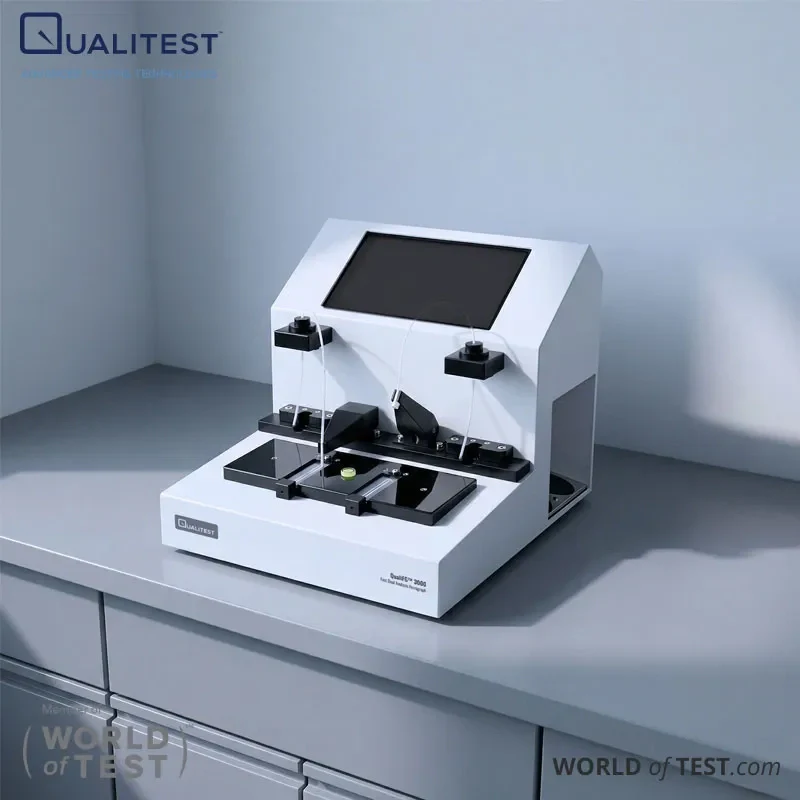
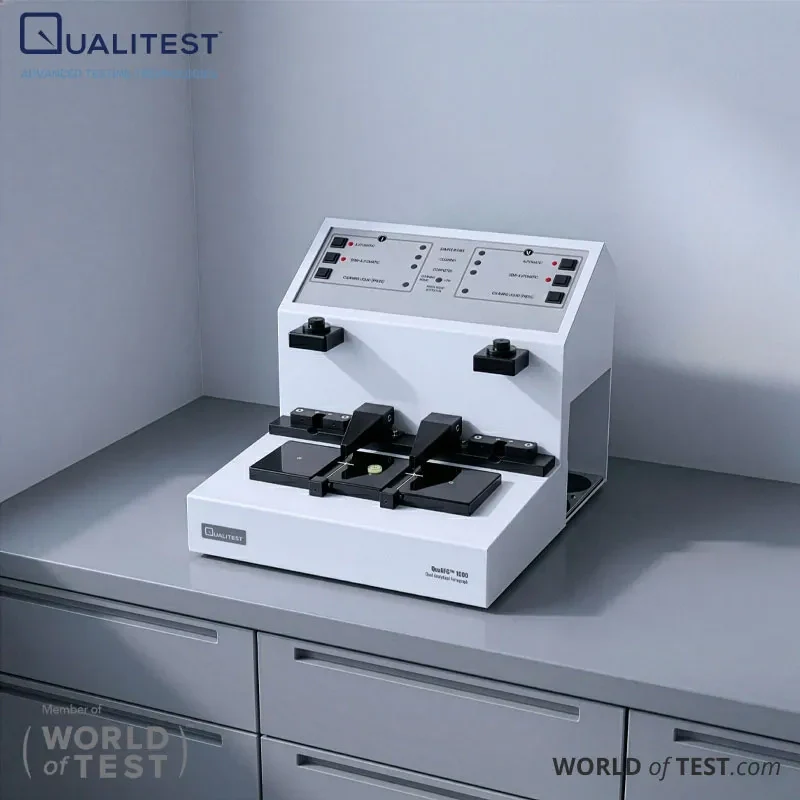
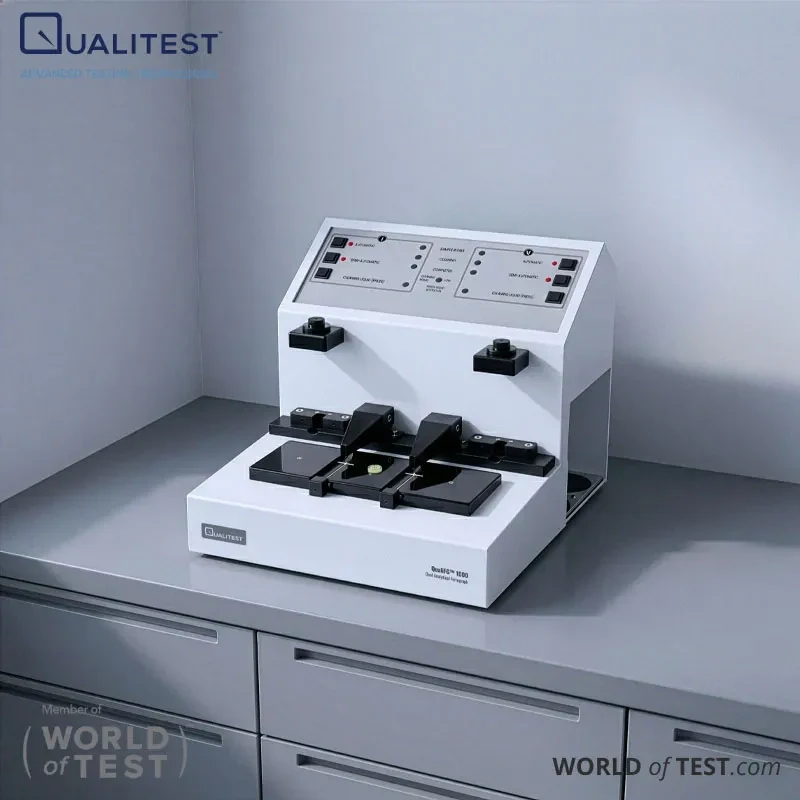
Laboratory Dual Analysis Ferrograph – QualiFG™ 2000
The QualiFG™ 2000 Laboratory Dual Analysis Ferrograph is a dual-channel system engineered for wear particle separation and precise ferrogram preparation from lubricating and hydraulic oil samples. It generates two ferrograms simultaneously, enabling higher sample throughput while maintaining consistent particle deposition for accurate microscopy-based wear debris evaluation.
Designed for advanced laboratory oil analysis, this system streamlines routine ferrography with reduced manual intervention. It features automatic sample handling, synchronized dual-channel operation, a high-gradient permanent magnetic field, and controlled flow regulation to ensure stable and repeatable ferrogram formation for reliable diagnostic results.
The QualiFG™ 2000 is well-suited for oil analysis laboratories, industrial maintenance programs, and condition monitoring teams focused on equipment reliability through analytical ferrography. It is widely applicable across transportation, steel manufacturing, heavy industry, power generation, as well as marine and defense gearbox lubrication systems.
Laboratory Dual Analysis Ferrograph – QualiFG™ 2000 Applications
Transportation and heavy fleet maintenance:
The QualiFG™ 2000 supports wear debris monitoring in diesel locomotives and heavy-duty fleet machinery. Analytical ferrography enables early detection of abnormal wear in bearings, gears, and pumps, helping maintenance teams make informed decisions when oil analysis indicates increased particle concentration.
Iron and steel industry:
This Ferrograph is well-suited for high-load applications such as fan assemblies, gear drives, and hydraulic systems operating in harsh, contamination-prone environments. The prepared ferrograms assist in distinguishing abrasive particles, fatigue-related debris, and external contaminants, improving the speed and accuracy of wear mechanism analysis.
Electric power industry:
The QualiFG™ 2000 is also applicable for generator sets and other rotating equipment used in power generation facilities. Variations in particle size, shape, and distribution support early identification of scuffing, fatigue wear, or contamination-related issues during routine condition monitoring.
Marine and defense gear systems:
The system is effective for propulsion systems and transmission gearboxes where early-stage wear detection is critical for operational reliability. Dual-channel ferrogram preparation enhances comparative evaluation and supports more reliable confirmation of wear-related findings.
Standards
-
ASTM D7690: Standard guide for microscopic identification of wear and contaminant particles on ferrograms prepared from in-service lubricants.
-
ASTM D7684: Standard practice for classification, interpretation, and reporting of microscopic particle characterization in used lubricating oils.
-
SH/T 0573: Analytical ferrography test method for evaluating wear particles in used lubricating oils.
Laboratory Dual Analysis Ferrograph – QualiFG™ 2000 Key Features
Dual-channel synchronous preparation:
The QualiFG™ 2000 generates two ferrograms simultaneously using independent channels. This increases daily sample throughput and enables direct comparison between samples for trend analysis, validation, and baseline-versus-issue assessment.
Automatic and semi-automatic operation:
The system supports both automatic and semi-automatic modes. Once a sample is loaded, automatic processing reduces operator involvement, improving workflow efficiency for routine laboratory testing.
High-gradient magnetic field:
The instrument utilizes a permanent magnet-based high-gradient field with a maximum flux density of approximately 1.8 T ±0.1 T and a field gradient exceeding 0.5 T/mm (values to be verified prior to final specification release). This enables effective magnetic separation of wear particles during ferrogram preparation.
Adjustable sample flow for repeatability:
Controlled and adjustable flow settings help maintain uniform particle deposition on the ferrogram, supporting consistent results across repeated tests.
Fast preparation cycle:
Under standard operating conditions, two ferrograms can be prepared in less than 20 minutes, making the system suitable for routine oil analysis programs that require microscopy-based diagnostics without workflow delays.
Clear deposition track for improved analysis:
The ferrogram deposition area is designed for high clarity, allowing improved distinction between metallic, organic, and non-metallic particles under microscopic examination, which enhances diagnostic accuracy.
Particle arrangement by magnetic response and size:
Particles are separated and arranged according to magnetic properties and size, supporting faster interpretation of wear severity and debris distribution during microscopic evaluation.
Automatic and manual cleaning options:
The system provides both automatic and manual cleaning modes, offering flexibility for routine maintenance and post-analysis preparation.
Integrated waste handling system:
A built-in waste collection unit with vacuum-assisted extraction transfers waste liquid into a dedicated container, helping maintain a cleaner working environment and reducing exposure to vapor emissions.
Low sensitivity to moisture content:
Oil moisture has minimal impact on ferrogram formation, allowing reliable analysis of routine field samples with varying contamination levels.
Theory and Method
A Ferrograph operates by passing an oil sample over a ferrographic substrate while the fluid is exposed to a magnetic field. Ferrous particles are attracted and aligned along the magnetic gradient, depositing in characteristic patterns, while non-ferrous particles and contaminants settle based on flow dynamics and gravitational effects. This controlled deposition forms a distinct track that enables microscopic evaluation of particle type, size, surface condition, and probable wear mechanisms.
The QualiFG™ 2000 is designed with two independent circuits, enabling simultaneous preparation of two oil samples. Its controlled flow system, combined with a high-gradient magnetic field, organizes particles according to magnetic response and size distribution, supporting consistent ferrogram formation, improved repeatability, and efficient comparative analysis between samples.
The transparent ferrogram enhances visual clarity during microscopy, allowing clearer separation of metallic, organic, and non-metallic debris. Reduced particle overlap and more structured deposition improve observation quality, enabling faster and more reliable diagnostic interpretation.
Laboratory Dual Analysis Ferrograph – QualiFG™ 2000 Technical Specification
| Parameter | QualiFG™ 2000 |
|---|---|
| Product type | Laboratory Dual Analysis Ferrograph |
| Preparation channels | Dual-channel synchronous preparation |
| Preparation modes | Automatic / Semi-automatic |
| Voltage | AC 220 V, 50 Hz |
| Optional voltage | 110 V available |
| Wear particle measurement range | 0 to 800 μm |
| Sampling / injection method | Micro-pump pressure type, automatic sampling |
| Cleaning methods | Automatic cleaning and manual cleaning |
| Magnetic field | Permanent magnet, high-gradient magnetic field |
| Maximum magnetic field gradient | > 0.5 T/mm |
| Maximum magnetic flux density | 1.8 T ±0.1 T |
| Dilution / cleaning solvent | Tetrachloroethylene |
| Plate inclination | 1° to 5° |
| Display | dual 1.54-inch OLED displays |
| Oil sample transfer speed | 10 to 30 mL/h |
| Cleaning agent flow rate | 30 to 100 mL/h |
| Measurement resolution | 1 μm |
| Sample volume per analysis | 1 mL |
| Oil delivery pipe size | OD 2.6 mm, ID 1.8 mm |
| Ferrographic substrate size | 60 × 24 × 0.17 mm |
| Overall size | 395 × 355 × 335 mm |
| Weight | About 14 kg |
| Referenced standards | ASTM D7690, ASTM D7684 |
Description
Laboratory Dual Analysis Ferrograph – QualiFG™ 2000
The QualiFG™ 2000 Laboratory Dual Analysis Ferrograph is a dual-channel system engineered for wear particle separation and precise ferrogram preparation from lubricating and hydraulic oil samples. It generates two ferrograms simultaneously, enabling higher sample throughput while maintaining consistent particle deposition for accurate microscopy-based wear debris evaluation.
Designed for advanced laboratory oil analysis, this system streamlines routine ferrography with reduced manual intervention. It features automatic sample handling, synchronized dual-channel operation, a high-gradient permanent magnetic field, and controlled flow regulation to ensure stable and repeatable ferrogram formation for reliable diagnostic results.
The QualiFG™ 2000 is well-suited for oil analysis laboratories, industrial maintenance programs, and condition monitoring teams focused on equipment reliability through analytical ferrography. It is widely applicable across transportation, steel manufacturing, heavy industry, power generation, as well as marine and defense gearbox lubrication systems.
Laboratory Dual Analysis Ferrograph – QualiFG™ 2000 Applications
Transportation and heavy fleet maintenance:
The QualiFG™ 2000 supports wear debris monitoring in diesel locomotives and heavy-duty fleet machinery. Analytical ferrography enables early detection of abnormal wear in bearings, gears, and pumps, helping maintenance teams make informed decisions when oil analysis indicates increased particle concentration.
Iron and steel industry:
This Ferrograph is well-suited for high-load applications such as fan assemblies, gear drives, and hydraulic systems operating in harsh, contamination-prone environments. The prepared ferrograms assist in distinguishing abrasive particles, fatigue-related debris, and external contaminants, improving the speed and accuracy of wear mechanism analysis.
Electric power industry:
The QualiFG™ 2000 is also applicable for generator sets and other rotating equipment used in power generation facilities. Variations in particle size, shape, and distribution support early identification of scuffing, fatigue wear, or contamination-related issues during routine condition monitoring.
Marine and defense gear systems:
The system is effective for propulsion systems and transmission gearboxes where early-stage wear detection is critical for operational reliability. Dual-channel ferrogram preparation enhances comparative evaluation and supports more reliable confirmation of wear-related findings.
Standards
-
ASTM D7690: Standard guide for microscopic identification of wear and contaminant particles on ferrograms prepared from in-service lubricants.
-
ASTM D7684: Standard practice for classification, interpretation, and reporting of microscopic particle characterization in used lubricating oils.
-
SH/T 0573: Analytical ferrography test method for evaluating wear particles in used lubricating oils.
Laboratory Dual Analysis Ferrograph – QualiFG™ 2000 Key Features
Dual-channel synchronous preparation:
The QualiFG™ 2000 generates two ferrograms simultaneously using independent channels. This increases daily sample throughput and enables direct comparison between samples for trend analysis, validation, and baseline-versus-issue assessment.
Automatic and semi-automatic operation:
The system supports both automatic and semi-automatic modes. Once a sample is loaded, automatic processing reduces operator involvement, improving workflow efficiency for routine laboratory testing.
High-gradient magnetic field:
The instrument utilizes a permanent magnet-based high-gradient field with a maximum flux density of approximately 1.8 T ±0.1 T and a field gradient exceeding 0.5 T/mm (values to be verified prior to final specification release). This enables effective magnetic separation of wear particles during ferrogram preparation.
Adjustable sample flow for repeatability:
Controlled and adjustable flow settings help maintain uniform particle deposition on the ferrogram, supporting consistent results across repeated tests.
Fast preparation cycle:
Under standard operating conditions, two ferrograms can be prepared in less than 20 minutes, making the system suitable for routine oil analysis programs that require microscopy-based diagnostics without workflow delays.
Clear deposition track for improved analysis:
The ferrogram deposition area is designed for high clarity, allowing improved distinction between metallic, organic, and non-metallic particles under microscopic examination, which enhances diagnostic accuracy.
Particle arrangement by magnetic response and size:
Particles are separated and arranged according to magnetic properties and size, supporting faster interpretation of wear severity and debris distribution during microscopic evaluation.
Automatic and manual cleaning options:
The system provides both automatic and manual cleaning modes, offering flexibility for routine maintenance and post-analysis preparation.
Integrated waste handling system:
A built-in waste collection unit with vacuum-assisted extraction transfers waste liquid into a dedicated container, helping maintain a cleaner working environment and reducing exposure to vapor emissions.
Low sensitivity to moisture content:
Oil moisture has minimal impact on ferrogram formation, allowing reliable analysis of routine field samples with varying contamination levels.
Theory and Method
A Ferrograph operates by passing an oil sample over a ferrographic substrate while the fluid is exposed to a magnetic field. Ferrous particles are attracted and aligned along the magnetic gradient, depositing in characteristic patterns, while non-ferrous particles and contaminants settle based on flow dynamics and gravitational effects. This controlled deposition forms a distinct track that enables microscopic evaluation of particle type, size, surface condition, and probable wear mechanisms.
The QualiFG™ 2000 is designed with two independent circuits, enabling simultaneous preparation of two oil samples. Its controlled flow system, combined with a high-gradient magnetic field, organizes particles according to magnetic response and size distribution, supporting consistent ferrogram formation, improved repeatability, and efficient comparative analysis between samples.
The transparent ferrogram enhances visual clarity during microscopy, allowing clearer separation of metallic, organic, and non-metallic debris. Reduced particle overlap and more structured deposition improve observation quality, enabling faster and more reliable diagnostic interpretation.
Laboratory Dual Analysis Ferrograph – QualiFG™ 2000 Technical Specification
| Parameter | QualiFG™ 2000 |
|---|---|
| Product type | Laboratory Dual Analysis Ferrograph |
| Preparation channels | Dual-channel synchronous preparation |
| Preparation modes | Automatic / Semi-automatic |
| Voltage | AC 220 V, 50 Hz |
| Optional voltage | 110 V available |
| Wear particle measurement range | 0 to 800 μm |
| Sampling / injection method | Micro-pump pressure type, automatic sampling |
| Cleaning methods | Automatic cleaning and manual cleaning |
| Magnetic field | Permanent magnet, high-gradient magnetic field |
| Maximum magnetic field gradient | > 0.5 T/mm |
| Maximum magnetic flux density | 1.8 T ±0.1 T |
| Dilution / cleaning solvent | Tetrachloroethylene |
| Plate inclination | 1° to 5° |
| Display | dual 1.54-inch OLED displays |
| Oil sample transfer speed | 10 to 30 mL/h |
| Cleaning agent flow rate | 30 to 100 mL/h |
| Measurement resolution | 1 μm |
| Sample volume per analysis | 1 mL |
| Oil delivery pipe size | OD 2.6 mm, ID 1.8 mm |
| Ferrographic substrate size | 60 × 24 × 0.17 mm |
| Overall size | 395 × 355 × 335 mm |
| Weight | About 14 kg |
| Referenced standards | ASTM D7690, ASTM D7684 |